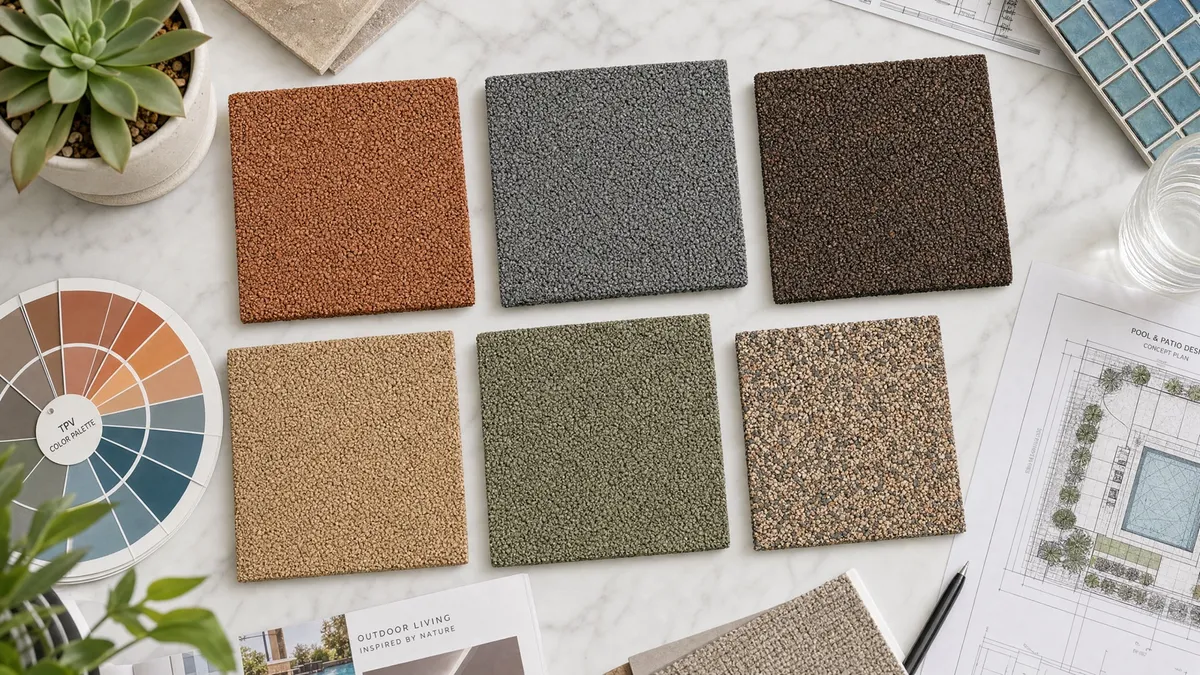
When planning a DFW backyard renovation, color, layout, transitions, and the condition of the existing hardscape all shape the final result. A surface choice should fit both the property and the way the space will be used.
Affordable Rubber Surfacing installs TPV poured-in-place rubber surfacing on suitable prepared surfaces. Here are practical design directions to discuss during a pool-deck or patio evaluation.
1. Earth Tones and Desert Neutrals
Natural, earthy palettes can work well with Texas landscaping and outdoor living spaces.
The Look: Rich terracottas, warm sands, deep tans, and subtle taupes.
What to discuss: Ask which colors or blends are available for your proposed system, and view samples in the intended light.
2. The Seamless, Monolithic Aesthetic
The modern aesthetic favors clean, uninterrupted lines that make outdoor spaces feel larger and more cohesive.
The Look: A single, continuous surface flowing from the back door, across the patio, and around the pool coping.
What to discuss: A hand-troweled system can create a continuous finished surface on suitable prepared hardscape. Existing cracks, transitions, and structural movement still need site-specific review.
3. High-Contrast Borders and Inlays
Contrasting borders are a popular way to make an architectural statement.
The Look: A primary deck color bordered by a contrasting color along the pool edge or patio perimeter.
What to discuss: Borders, color changes, and graphics depend on the available material options, layout, and project scope. Confirm what is feasible before including them in a design plan.
4. Surface-Planning Details
The best-looking design can still fail if drainage, edges, movement, and the existing substrate are ignored.
What to discuss: Review the intended use, water exposure, drainage, texture, and maintenance expectations together. Do not assume a material alone meets a particular safety, accessibility, or fall-height requirement.
5. Resurfacing Over Replacement
An overlay may be worth considering when existing hardscape is stable and suitable for preparation.
What to discuss: ARS evaluates stable existing concrete and other hardscape before recommending an overlay. Structural movement, drainage failures, or a failing base may need correction first. Read more in our guide on Resurfacing vs. Replacing a Cracked Pool Deck.
Design Your Backyard
Contact Affordable Rubber Surfacing to review your existing surface, project goals, and available finish options.
Schedule Your Free Design Consultation Today
Frequently Asked
Can I create a custom color blend for my pool deck?
Color and finish options are reviewed as part of a project evaluation. Ask ARS which options are available for the proposed material system and your site.
Will darker colors get too hot in the Texas sun?
Color, shade, time of day, and direct sun exposure can affect how an outdoor surface feels. Review samples at the intended location instead of relying on a universal heat claim.
Can rubber surfacing be poured over my existing brick coping?
Coping, edges, transitions, and the condition of the existing hardscape must be evaluated before an installer can recommend a detail. ARS reviews these site-specific conditions before proposing an overlay.
How do I keep the colors looking vibrant?
Care guidance depends on the installed system, exposure, and site conditions. Ask ARS for project-specific cleaning and maintenance guidance rather than assuming a universal routine.
See If Rubber Surfacing Is Right for Your Project
Share your contact info below. Affordable Rubber Surfacing will follow up by text for project photos and details, then schedule a free consultation.